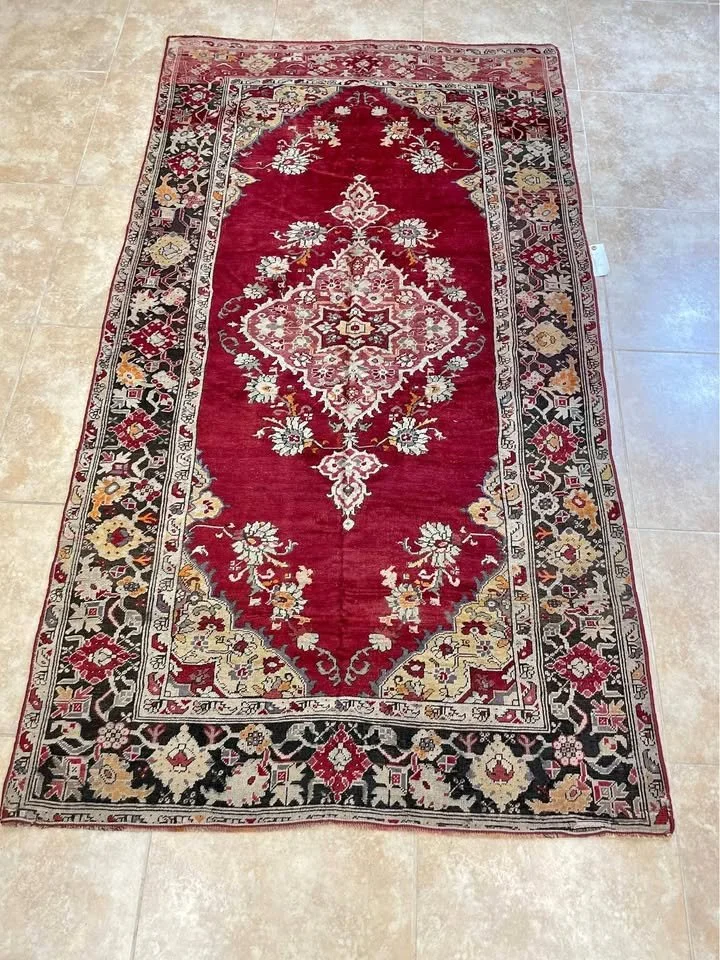
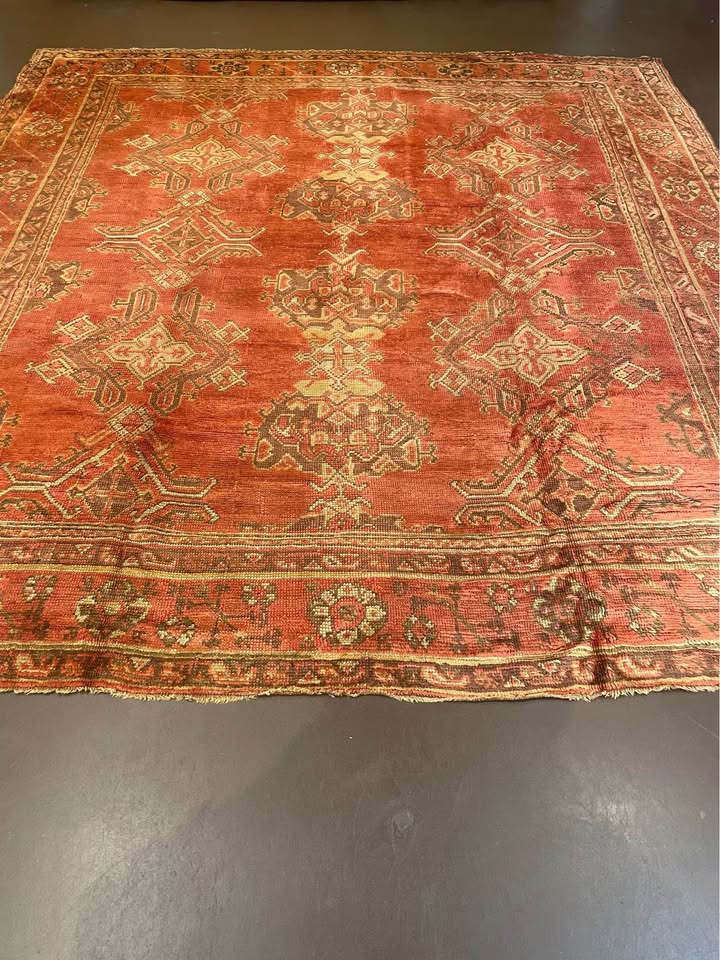
Needle Point 276
$500
Beautiful needlepoint Spanish savannri design. This is an over size rug in great condition. New backing installed. No pet stain, no smell, from pet free home. Shipping 📦 is available with UPS ground! Needlepoint rugs are a unique type of floor covering, distinguished by the method of their creation. Unlike woven or knotted pile carpets, needlepoint rugs are a form of embroidery. They are made by stitching yarn onto a stiff, open-weave canvas, which is entirely covered by the stitches. This technique, also known as "canvas work" or "canvas embroidery," results in a flat, dense textile. History The origins of needlepoint can be traced back thousands of years to ancient Egypt, where diagonal stitches were used to sew together canvas for tents. The craft evolved over centuries, and by the 16th century, it was a popular domestic pastime in England and Europe, used for creating items like chair coverings and pillows. The production of needlepoint rugs reached an artistic peak in the 18th century, particularly in England and France. Designs were influenced by contemporary art movements like Rococo and Neoclassical styles. In the Victorian era, needlepoint rugs became a fashion statement, featuring elaborate floral motifs and sometimes geometric or Gothic Revival patterns. The introduction of new chemical dyes in the 19th century also expanded the available color palettes. How They Are Made The process of making a needlepoint rug involves several key steps: * Canvas: The foundation of the rug is a durable, open-weave canvas, typically made from jute, linen, or cotton. For very large rugs, several pieces of canvas may be sewn together. * Stitches: The most common stitches used are the "tent stitch" (also known as petit point or continental stitch) and the "gros point," which are diagonal stitches that cover the canvas. The pattern is created by changing the color of the yarn. * Yarn: The yarn is typically wool, which is durable and well-suited for rugs. Persian, tapestry, and crewel wools are all common choices. Wool-silk blends can also be used, but pure wool is often preferred for its longevity. * Design: The designs for needlepoint rugs can be traditional, featuring floral or geometric patterns, or modern, reflecting contemporary art. Until the 19th century, patterns were often hand-drawn onto the canvas, but later, printed charts became popular. Characteristics and Use Needlepoint rugs have a number of distinctive characteristics: * Flatweave: Unlike pile rugs, needlepoint rugs are flatweaves, meaning they have no raised surface or pile. * Durability: When made with high-quality wool and strong stitching, needlepoint rugs are quite durable. * Aesthetics: The fine mesh of the canvas allows for intricate detail and vibrant, artistic designs. * Placement: While beautiful on the floor, some needlepoint rugs, especially antiques or smaller pieces, may be better suited for display on a wall or as a table covering due to their thin structure and potential for unevenness. If placed on a hard floor, a non-slip pad is recommended. Needlepoint rugs are considered special and collectible due to the time and skill required to create them. They are a testament to a long-standing tradition of needlework and a unique form of textile art.
Have questions? Contact us for inquiries.